

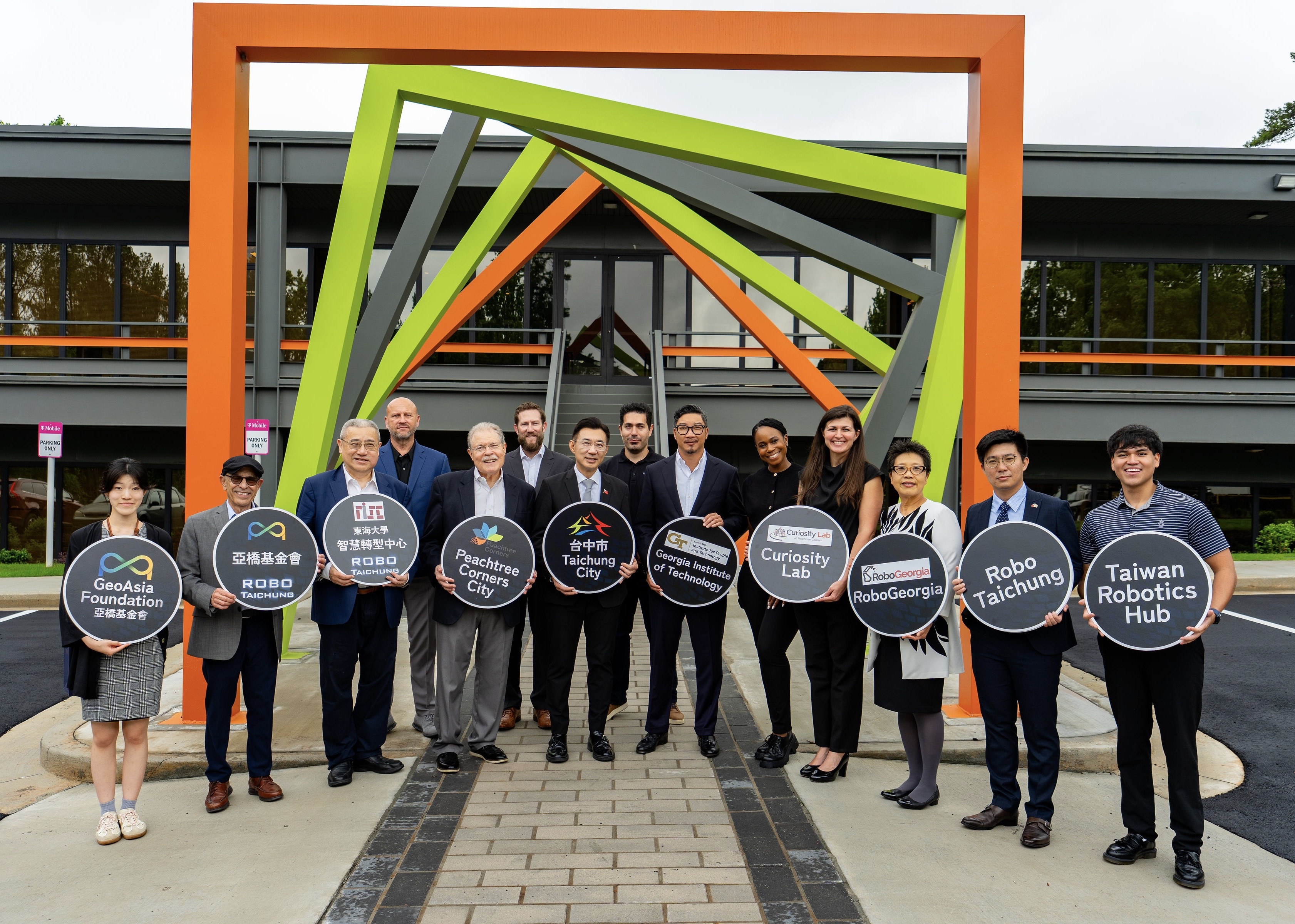
Taiwan's Vice President of the Legislature arrives in Atlanta with a cross-ministry delegation, a clear industrial vision, and a pivotal ally: GeoAsia Foundation, whose groundwork has turned the Taiwan Robotics Hub concept into an operational reality.
By Staff Reporter, GeoAsia News | May 29, 2026
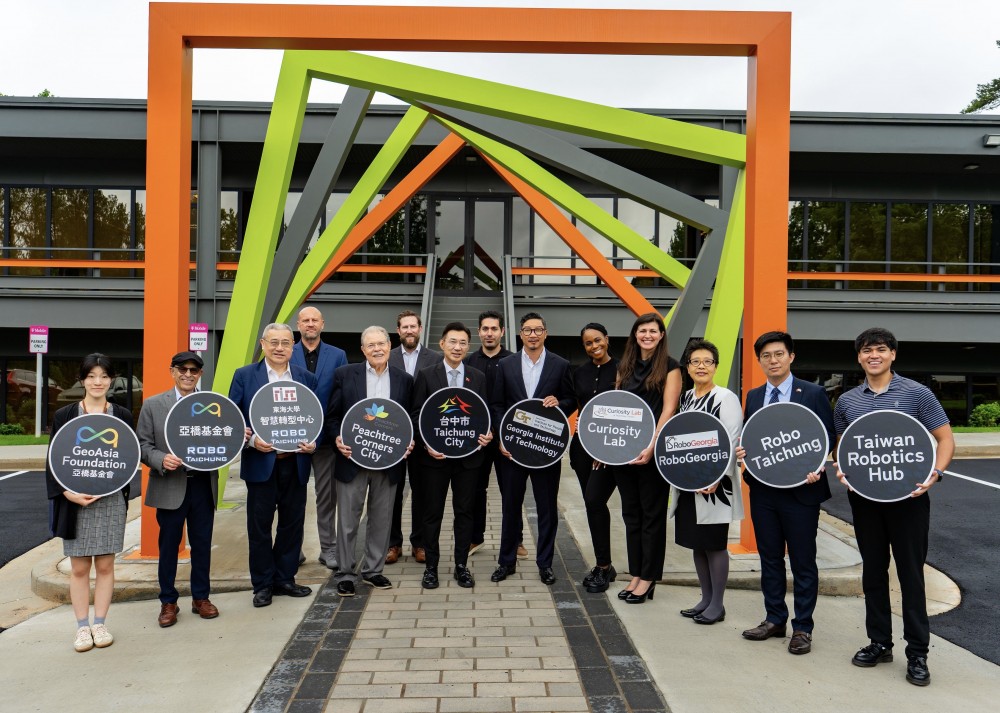
ATLANTA — Chiang Chi-Chen, Vice President of Taiwan's Legislative Yuan, arrived in Georgia on May 27 with a mission that would have seemed ambitious even six months ago: to position Taichung — Taiwan's precision machinery heartland — as the country's robotics manufacturing capital, and to do so by forging a structural alliance with the American state that has quietly become Taiwan's most important industrial partner outside of Silicon Valley.
In back-to-back meetings, Chiang called on Georgia's Commissioner of Economic Development Pat Wilson and Peachtree Corners Mayor Mike Mason, pitching Taichung's manufacturers across machinery, automotive components, electronics, optics, and aerospace — sectors that, he argued, are precisely what the American market needs and what Taiwan, beyond its semiconductor renown, can supply at scale.
The visit did not materialize from thin air. Its institutional scaffolding was built, meeting by meeting, over the preceding year by the GeoAsia Foundation — the Taiwan-based nonprofit whose Chairman, C.Y. Huang, has been the primary architect of the Taiwan–Georgia industrial corridor.
Georgia Tech Explores the 'Robotics Manufacturing City' Vision
At Georgia Tech's robotics and intelligent machinery research institutes, Chiang witnessed AI-enabled robotic systems operating across agriculture, logistics, and manufacturing — including USDA-backed projects using robots to harvest apples and drones to monitor crop health at field level. Georgia Tech, ranked among the global top-15 in engineering and science, has indicated active interest in co-developing Taichung as a humanoid robotics innovation platform.
Chiang articulated the strategic logic: Taiwan holds advanced semiconductor fabrication; Taichung commands precision mechanical manufacturing. Together, they constitute the complete physical and computational foundation for humanoid robotics development — a combination no single country can easily replicate. The concept he is advancing, Taiwan Robotics Manufacturing City (TRMC), is positioned as Taichung's bid to become, in his words, "the next guardian mountain" after TSMC — a national industrial anchor in a new domain.
Curiosity Lab: Compliance, Certification, and Market Access
A second meeting — at Curiosity Lab, the Peachtree Corners smart city innovation park that GeoAsia Foundation has cultivated as the primary U.S. deployment environment for the Taiwan Robotics Hub — produced a concrete commercial discussion. Curiosity Lab outlined how Atlanta's density of corporate headquarters, convenient airport access, and cost advantage over coastal tech hubs can help Taichung companies navigate U.S. regulatory and privacy law requirements and accelerate product certification in the American market.
Commissioner Wilson, who visited Taichung in 2025 and came away impressed with its smart manufacturing ecosystem, confirmed Georgia's strategic pivot: from pursuing Taiwan's semiconductor sector to actively seeking collaboration in robotics and advanced manufacturing. He described Georgia and Taichung as natural partners in AI manufacturing applications — a characterization that, six months ago, would have required explanation. Today, given the network that GeoAsia Foundation has assembled, it requires none.